Immanuel

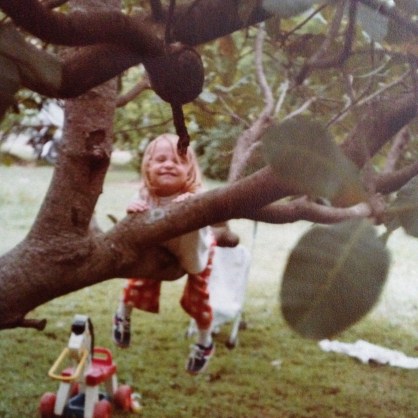
I grew up in West Africa, daughter to career missionaries. I have so many wonderful memories of my childhood in Nigeria: from running barefoot for hours through the red dirt on our compound roads, to climbing the guava img_2201trees in our yard and breathing deep of that intoxicating smell of a tropical storm approaching… Being an MK means I have a richer, broader view of our world, but it also means I have lived most of my life in a disorienting third culture that few understand. I’m not Nigerian, and I will probably never really feel like an American.
This internal struggle to identify myself—to root myself—has been life-long, and at times debilitating. I read a letter recently that was written to missionary’s kids, and I wept when I read it. It gave voice to the struggle that for many MK’s is invisible. It said quite simply, “At times YOU bore the weight of the calling of God on your parents’ lives…you have made sacrifices that have gone unacknowledged by anyone.” A lifetime of sacrifices, unacknowledged. Living the life of a Third Culture Kid often means never being understood. It means belonging everywhere and nowhere; it means being surrounded by familiar, happy faces and feeling completely alone. It means leaving the people who mean the most to you in the world, crossing oceans in solitude, and fumbling through a confusing “home” culture to figure out where you fit. It means struggling—even as an adult—to make genuine, real connections with people, because you are so tired of goodbyes. It means having a heart so full with memories so rich, and having no one to share them with. It means being unseen. Unacknowledged.

And yet, Immanuel. God with me…

HE is my identity when I don’t know who I am. HE is my solidarity when I am uprooted. HE is my home when I have none. HE is my family when mine are oceans away. HE SEES me when I feel unseen and misunderstood and so, so alone.

Many years ago, I married a wonderful man who tirelessly encourages me when I struggle, and waits for me in the moments when I’m insecure and distant. We have our times of joy and connection, but we also have heavy, empty spaces of distance and silence…God with us? Even here?

Two years after getting married, we became parents for the first time. I still remember holding each of my babies seconds after they entered this world…crying, shaking, and scared.
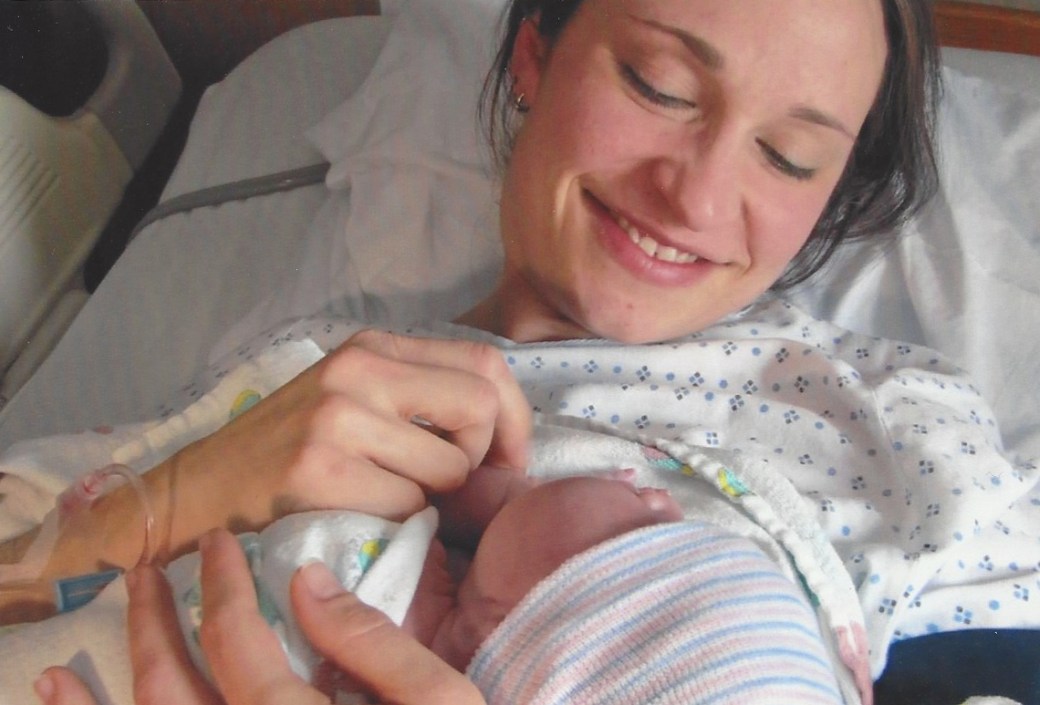
The joy that welled up in the deepest parts of me! The tightening around my heart, jumping up into my throat! I remember those first moments so clearly: holding their frail, wrinkly bodies close, and trying to whisper calm to each little spirit as they flailed with the newness of this place. They had been in our world but moments, yet when I looked into their deep, brown eyes I knew them. I loved them. 

I could not comprehend why Abba Father had entrusted these precious lives to me. To me! A lost, insecure Third Culture Kid with no idea how to encourage four children through their most difficult struggles in this life…I cannot even navigate them myself. Fourteen years have somehow raced by, and my children are still flailing with the newness of this place, and I am still trying to whisper calm to their spirits, while I myself still feel shaky and scared inside. And I fail. Every day, I fail.

And yet, Immanuel. God with me…

HE is Comforter for my daughter when I can’t find the right words. HE is the patience I need when I have none left to give. HE is my support when I’m drowning in doubt. HE is the deep breath I take over, and over, and over to silence my tongue. HE is my peace when I’m weeping with the ache of harsh words spoken too quickly. HE is my forgiveness when I lose it with my son. HE is my perseverance when I’m not connecting with the man I love. HE is my certainty when I second-guess my calling. Every. Single. Day.

And when I buckle under the weight of childhood, motherhood, marriage, calling…HE is the Rock on whom I stand.

Every time I fall.
Leaving Home

1

I left Nigeria on a day when dark clouds cluttered the sky over the Plateau, and the delicious smell of approaching rain hung in the thick air.  I remember standing on the red dirt road in front of our house, waiting to board the van that was to take me across bush roads to our tiny international airport.  I remember the scent of the mango tree, the soft prickle of heat on my skin, and the tremendous ache in my heart.  I remember the fear.  I remember desperately, silently choking back the tears that burned deep in my throat.  And I remember the moment that I broke under their weight, for at that moment the heavy clouds gave way.  The Plateau sky opened up and gently poured its aching over my skin.  Clouds, dark and full released rain so gentle and so steady that I was quickly lost in it.  The rain was strong arms slipping around me, pulling me close, calming my rage.  My country was crying for me.  And I let it.  I didn’t run for the cover of a roof, click open an umbrella, or slip a hood over my head.  I let it pour down and soak every inch of me until I shook with the weight of fabric soaked cold and the burden of my own tears.  My hearts’ cry mixing with tears from heaven, sliding down my skin, dripping all my anger into the mud at my feet.  I couldn’t bear to leave.

But I did.

Eighteen years have slipped by since that day, yet it visits me still.  I was the middle child of career missionaries in Nigeria, West Africa, and a little town called Jos is where I spent most of my growing-up years.  The red Harmattan dust, the smell of kosai and yams frying along the road, the sweet scent of an approaching thunderstorm, and streets bustling with dark, friendly faces are what was familiar to me.  It permeated every piece of me, seeped into my skin and colored my vision.  And yet, even here, I felt unsettled. No matter how dear to me was this place and these people—no matter how many afternoons I spent running barefoot through the red dirt, no matter how many guavas I ate right off the tree—I knew I could never be fully Nigerian.  Somehow, I would always be bature: a visiting white face, with roots someplace else.  Home, I was told, was back in the United States, where style was contemporary, stores were colossal, and the air was bitter with winter.  But it didn’t feel like home.  Not once in all the times we visited America did anything feel familiar.  It was always changing, always alien, always frightening.  I did not know this place.  It was not mine.

Most of my childhood I spent trying desperately to figure out where I belonged: years of finding, losing, grieving… I still don’t know.  That little cinderblock house in Jos was the only thing that ever made sense.  It never really changed—it was constant—and I always felt safe within its walls.  It didn’t matter where in the world we journeyed to, we always ended up back under that same tin roof.  It was home, soaked with its scents and its memories.  It was my hiding place from the world that confused and rejected me—on both sides of the ocean—again and again.  The path I’ve traveled as a Third Culture Kid is strewn with the carcasses of goodbyes, but this…this was the hardest one yet.  Leaving home meant leaving behind the only thing that had ever seemed right in my life.  And I was terrified.  I remember watching the puddles gather at my feet, the red mud growing thick, my tears dripping hard, and I remember wondering how long that profound ache would linger.  How long would my heart remain here—under Plateau skies—after my feet would uproot from that driveway and walk away?

For years afterward, my memories of childhood in Nigeria continued to stir such deep sadness in every part of me, crippling my spirit and morphing into a silent anger towards everyone I met.  I wandered through the busyness of college years pretending to have it all together.  Pretending I knew who I was.  Pretending the ache wasn’t there.  Always pretending.  Desperately wanting to completely belong.  Somewhere.  Anywhere.

It took me a long time to finally figure out that my memories of home are okay to carry around, and that being an uprooted, countryless TCK isn’t necessarily a bad thing.  I spent so many years feeling isolated and angry and wishing I could have been someone else, that I missed one of the most beautiful things about being a TCK: there are SO many of us.  All wandering.  All worn from the heaviness of so many goodbyes.  All confused and colorful with our mix of cultures and our refusing to blend in.  My memories of home don’t need to cripple me, they make me solid.  They are what stay with me, just under my skin, and color my present.  They are mine.  That moldy smell of elephant grass, the blue lizards with their orange heads sunning and nodding on concrete ledges, the swishing and clicking of mango tree branches in the soft, warm evening wind….

In Hausa they say “sha iska,” which literally means drink air.  That phrase always stirs something cavernous and piercing in my spirit, something that cries out for belonging.  Whoever you are, wherever you are, whether you feel you belong somewhere or not: DRINK the air.  Don’t just exist, don’t just wander unnoticing through each day.  Breathe deeply of life. Swallow each moment, savor it, keep it, for it will not linger long.  Drink in the bursting laughter of your children, and the way the setting sun looks as it casts its glow on the dry, golden cornfields.  The earthy scent of coffee brewing early in the morning, and the dizzying whirl of red and yellow leaves against October sky.  Sha iska.  Live fully.  When my children curl up in my lap and I hold them close, when my husband silently curls his fingers through mine in a crowded room, when an old friend and I laugh about a shared experience back across the ocean…in those small, scattered moments I feel like I just might belong somewhere.  Those sprinkled moments where I find I can truly drink of the air—I can sip deep from the uncomplicated loveliness of life, and all of my solitude and all of my uncertainty doesn’t matter anymore.  I belong right there.

Sometimes I think back to that day I left home, and I wonder when it was that my heart finally slipped away from it.  I like to think that I drank so fully of those moments that if I were to go back, my tears would no longer fall out of anger and confusion and fear, but out of gratitude…out of knowing that I had a good thing, I drank fully of it, and I would carry it always close—just under my skin—where it could color my today.